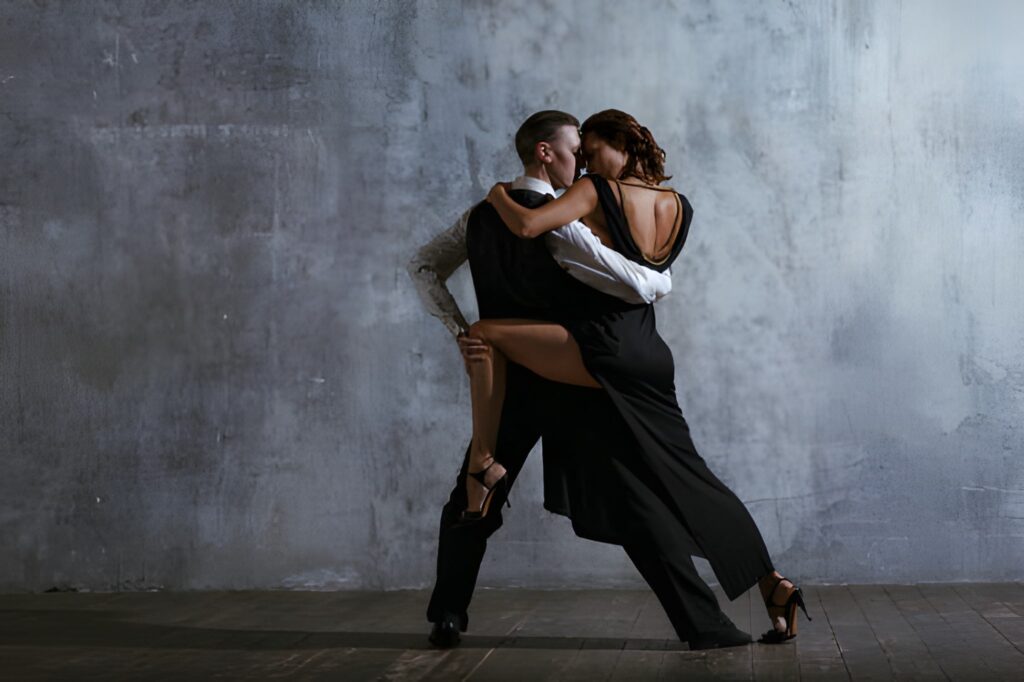
The Dance Partner Poem
A dance partner is, the left to your right,
They dance in the morning, or late in the night
Some win, some lose, some blame, some cry
From the first competition, to the final goodbye.
Some dance partners can, completely frustrate you
They push you, and praise you, until your next breakthrough.
So let’s take a moment, to lend a kind word
Instead of the norm, severe, or absurd
For dancing together, is too great a gift
To let fear and frustration, develop a rift.
Your partner’s too special, as a pair you connect
The best practice, for practice, is to practice respect.
The Dance Partner Poem Analysis
R-E-S-P-E-C-T
R – Remember
Take a minute before you show up to your next dance lesson to remember the moment when you decided to do this. Think of the positive byproducts learning to dance has brought you and your partner. Where would you be in your ability to collaborate and communicate if you replaced this time with sitting on the couch?
In fact, the couples who struggle most are the ones who forget why they started. The frustration of a tough rehearsal feels different when you remember that you chose this – together.
E – Emphasize
Take a minute to emphasize the positives. In all transparency, nobody wants to make a mistake when they are dancing. How you respond to those mistakes will dictate the mood moving forward. Emphasizing the positives, and eliminating the harsh criticism, will keep any partnership – dance or otherwise – much healthier.
S – Strategy
Sometimes we enter a dance lesson with the best intentions but with no strategy. The best strategy for a great partnership on the dance floor is to “empty your cup” and stay open minded to instruction and feedback.
What does “empty your cup” mean? It means letting go of what you think you know long enough to learn something new. It means your ego takes a back seat to your progress.
P – Patience
This is essential – not only when it comes to the learning curve, but also for good partner dancing. Leaders can’t lead partners that aren’t patient enough to wait.
And followers? Patience means trusting the lead even when your instinct says to jump ahead. The dance works when both people are in the same moment, not when one is rushing to the next one.
E – Encouraging
Do this to the degree that your partner needs it. At Arthur Murray, we emphasize that there must be evidence in your compliments, and the same can be said for encouragement. A kind word when you are frustrated is like a smiling face, but evidence of the positives is the hand that helps you out of your rut.
C – Calm
Arthur Murray consultant Bill Jacobson frequently reminds dancers that “It’s not brain surgery, people – it’s dancing.” So as important as the choreography is, or the event that is coming up, staying calm will keep the self-induced pressure at a minimum and allow you to enjoy it.
T – Try
One of the biggest differences between non-dancing couples and a dance couple is that you are constantly expanding your collective comfort zone. This is a good thing. Do more of it. Nothing puts you on the same side more than having a common “fun” adversary. Whether that’s a new dance (“Zouk anyone?”), a new project, or a new venue – try everything. It’s good for both of you.
Why Partnership Matters Beyond the Dance Floor
Here’s something that longtime dance couples discover: The skills you build dancing together don’t stay on the dance floor. They follow you home.
The patience you develop waiting for a lead translates to patience in conversation. The communication required to execute a complex pattern improves how you communicate about everything else. The mutual respect demanded by partner dancing seeps into how you treat each other during disagreements.
Dancing doesn’t just make you better dancers. It makes you better partners.
Final Thought
One of the greatest aspects of partner dancing is that every dance requires an invitation. For that moment, you are inviting that person to be your partner. This is part of the mystique of ballroom dancing. The nod to the old days of charm and elegance.
The request itself may last for a song, or a lifetime, but the real challenge is to be the best person on your side of the dance frame.
Your partner chose you. Make sure they don’t regret it.
Happy Dancing!