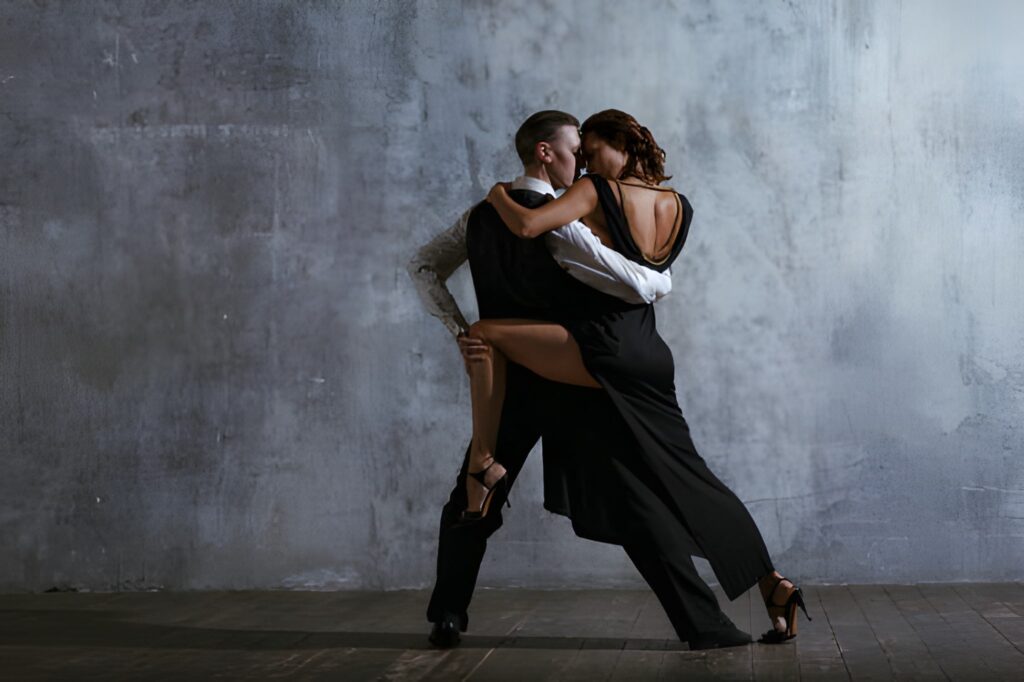

What is Social Dancing? The Complete Guide for Beginners
Social dancing is how real people dance at real events. No sequins, no judges, or public scoring necessary. It’s a skill anyone can develop with lessons, and here’s everything you need to know to get started*
What is Social Dancing? A Simple Definition
Social dancing is the non-competitive form of partner dancing designed for everyday social situations. It includes all the classic ballroom and Latin dances like Foxtrot, Waltz, Swing, Cha-Cha, Salsa, and more and adapts them for practical use at wedding receptions, parties, nightclubs, and social gatherings.
Unlike competitive or exhibition dancing, social dancing prioritizes connection over performance. The goal isn’t to impress judges or win trophies. It’s to enjoy moving with a partner, meet new people, and have fun.
You might also enjoy: Tips for Finding Love Through Social Dance
You might also enjoy: Become A Successful Social Dancer in 17 Steps
You might also enjoy: Work Friendly Social Dances That Won’t Get You …
Think of it this way: competitive dancing is like professional figure skating. Social dancing is like skating at your local rink with friends. It’s the same skills but with two very different goals.
<!– IMAGE: Couples dancing at a social event, relaxed atmosphere, mixed ages –>
<!– ALT: People enjoying social dancing at a casual ballroom dance party –>
—
Social Dancing vs. Competitive Dancing: What’s the Difference?
Many people avoid dance lessons because they picture spray tans, rhinestones, and dramatic poses. That’s competitive ballroom. While that may be a goal for some, the overwhelming majority of Arthur Murray students come in for the fun and enjoyment of social dancing.
Here’s how social dancing differs:
| Aspect | Social Dancing | Competitive Dancing |
| Purpose | Fun, socializing, stress relief | Expression, performance, technique |
| Attire | Casual to dressy | Dressy to Costumes/Formal |
| Choreography | Spontaneous. Read & react | Rehearsed choreography |
| Judging | No | Yes |
| Partners | Anyone at the event | Amateur or professional partner |
Bottom Line: Arthur Murray competitions are a great way to build confidence and performance skills, but everyone starts out with a social dancing foundation.
—
Types of Social Dances You Can Learn
Social dancing encompasses dozens of dance styles, each suited to different music and occasions. Here are the most popular:
Smooth/Standard Dances
Sometimes just referred to as “the ballroom dances” these are the styles that travel around the floor, look elegant, and work well with classic standards and contemporary ballads.
Foxtrot – The most versatile social dance. Smooth, walking-based movement that works with Frank Sinatra, Michael Buble, and countless other songs. Perfect for beginners because of it’s easy movement and gradual upgrades. Not to mention, this is the first dance where both leaders and followers learn where they’re able to talk while dancing.
Waltz – The classic romantic dance in 3/4 time. Characterized by rise-and-fall movement and sweeping turns. Great for formal events and timeless love songs.
Tango – Dramatic, passionate, and surprisingly practical. The sharp movements and close hold make it a conversation starter at any event.
<!– IMAGE: Couple dancing smooth Foxtrot at a wedding reception –>
<!– ALT: Elegant couple performing social Foxtrot dance at wedding –>
Rhythm/Latin Dances
These dances all have connections to nightclub origins, are designed for a compact space, but with plenty of playful energy and body rhythm.
Swing – Upbeat, energetic, and incredibly fun. Works with everything from 1940s jazz to modern pop. The [East Coast vs. West Coast](/blog/east-coast-west-coast-swing) styles offer different flavors for different music.
Cha-Cha – Flirty and playful with a distinctive syncopated rhythm. Perfect for Latin pop, disco, and upbeat party music.
Rumba – The slow, [romantic dance](/most-romantic-ballroom-dances-ever/) that replaces the awkward high-school sway. Ideal for slow songs at weddings, formal events, or just a spontaneous romantic moment.
Salsa – High-energy Latin dancing that’s become a worldwide phenomenon. Found at salsa clubs and any social dance party worth attending. This is a staple for any dancer, at any age, or interest level.
Bolero – This is a dance that combines the elegant movement of a Waltz, with the romantic mood of a Rumba. While this dance isn’t introduced until the Bronze 3 level, every Rumba and Waltz lesson works to build the Bolero foundation.
Samba – The national dance of Brazil may have it’s origins from Carnivale, but you won’t need 6 pack abs or a revealing costume to enjoy this one. Samba is a dance built around fun and fitness. If burning calories is your thing, this is your dance. Maybe those six pack abs aren’t far away?
Specialty Dances
Bachata – The approachable Latin dance that’s exploded in popularity. Simple footwork, close connection, and music you’ll hear everywhere.
Country Two-Step – Essential for country bars and western events. Fast, fun, and travels around the floor.
Hustle – The disco-era dance that never went away. Perfect for upbeat music at parties and clubs.
—
The Essential Skills for Good Social Dancing
You don’t need perfect technique to be a good social dancer. But these foundational skills make everything easier:
Leading and Following
The most important skill in partner dancing is non-verbal communication. The leader indicates direction, timing, and movement. The follower responds and adds their own styling.
This isn’t about dominance—it’s about partnership and connection (/blog/ballroom-dancing-lead-and-follow). Great leaders make following effortless. Great followers make leading feel easy.
Posture and Frame
If leading and following is the message, posture and frame are the antenna broadcasting the signal.
Good frame means:
– Standing tall with shoulders back
– Maintaining consistent arm position
– Creating a clear connection point with your partner
– Staying balanced over your own feet
You don’t need to be rigid—but you do need to be present and connected.
Timing and Rhythm
While many believe you’re either born with it or you’re not, timing is a learned skill. Think of your social dancing hobby as a dance major, with a minor in music appreciation. Through the course of your lessons, this includes:
– Staying on beat
– Recognizing when songs speed up or slow down
– Matching your energy to the music’s mood
– Knowing which dances fit which songs For more on this topic, check out Now That You’re Full Bronze. You might also enjoy Ready Player One Dance Party Checklist.
Multi-Tasking
Ballroom dancing has shown to be one of the single greatest hobbies to improve brain health. The reason? Multi-tasking. Learn more in Don’t Scrap Your Dancing Leftovers. Related reading: Your Ballroom Dancing Bar Menu.
Whether it’s talking while dancing or connecting upper body signals during lower body movement, social dancing creates improvement both externally and internally. See also: David Bowie Ballroom Dance Music. For more on this topic, check out 31 Things Dance Judges Want To See You Do.
Floorcraft
On a crowded dance floor, you need spatial awareness. Floorcraft means:
– Avoiding collisions with other couples
– Navigating traffic patterns
– Protecting your partner from hazards
– Adapting your dancing to available space You might also enjoy A Student’s Guide to Arthur Murray: From A to Z.
<!– IMAGE: Multiple couples dancing on a social dance floor, good spacing –>
<!– ALT: Social dancers demonstrating good floorcraft on crowded dance floor –>
—
The Benefits of Social Dancing
Learning to social dance delivers benefits far beyond the dance floor:
Physical Health
– Low-impact cardiovascular exercise
– Improved balance and coordination
– Better posture and core strength
– Increased flexibility
Mental Health
– Stress relief through movement and music
– Improved memory (learning patterns and sequences)
– Increased confidence in social situations
– Creative expression
Social Benefits
– Built-in conversation starter at any event
– New social circle of fellow dancers
– Stronger connection with your partner
– Something fun to do on date nights
Practical Benefits
– Never sit out at weddings again
– Confidence at work functions and galas
– A skill that impresses at any age
– Lifetime activity you can enjoy into your 80s and beyond
—
Where Can You Social Dance?
Once you learn, you’ll find opportunities everywhere:
Wedding receptions – The most common place people wish they knew how to dance. Foxtrot, Waltz, Swing, Rumba, and Hustle cover 90% of wedding music.
Dance studios – Most studios host weekly social dances or “practice parties” where students can dance in a supportive environment.
Ballroom dance clubs – Many cities have clubs that host regular social dances with live or DJ’d music.
Latin clubs – Salsa, Bachata, and Merengue nights happen weekly in most metropolitan areas.
Country bars – Two-Step and line dancing keep country venues packed.
Swing events – The swing dance community hosts regular socials, often with live bands.
Cruise ships – Ballroom dancing is a staple of cruise entertainment.
Private parties – The friend who can dance always gets invited back.
—
How to Get Started with Social Dancing
While some dances can be faked, social dancing isn’t one of them. When done well, it immediately sets the person apart and that transformation starts with proper instruction.
Why Private Lessons Work Best
A single private lesson at a reputable studio can replace countless hours of YouTube tutorials or group classes. Here’s why:
– Personalized feedback – An instructor spots and corrects your specific issues
– Efficient learning – No waiting for slower students in group settings
– Custom pacing – Move faster or slower based on your progress
– Partner matching – Learn with a skilled partner who adapts to you
What to Expect at Your First Lesson
Your first dance lesson typically includes:
1. A brief consultation about your goals (wedding? social confidence? fitness?)
2. An easy transition to the dance floor using Arthur Murray’s teaching elements – you’ll be dancing in the first five minutes.
3. Introduction to basic steps in a few dances
4. Practice with your instructor
5. Discussion of a learning path forward
No experience required. No special shoes needed for the first visit. Just show up in comfortable clothes and be ready to move.
How Long Does it Take?
Most students can dance comfortably at social events after 10-15 lessons. That’s enough to:
– Lead or follow a basic Foxtrot
– Handle slow songs with Rumba
– Manage upbeat music with Swing or Cha-Cha
– Navigate a dance floor with confidence
For a wedding first dance, plan for 6-10 lessons to deliver some basic fundamentals. Your first introductory lesson will help you and your wedding specialist map out a goal that suits your dreams and timeframe.
<!– IMAGE: Student taking first dance lesson with instructor, encouraging atmosphere –>
<!– ALT: Beginner learning social dancing basics in private lesson –>
—
The Arthur Murray Approach to Social Dancing
Arthur Murray himself understood the social dancer’s journey because he lived it. As a young man, he was too shy and awkward to dance. So he developed a teaching method specifically for people with zero experience who wanted the benefits of social dancing.
In 1912, he founded a company built on that mission. Today, Arthur Murray Dance Studios operate over 300 locations across six continents, making it the longest-running and most successful social dance organization in the world.
The curriculum focuses on practical skills you can use immediately, not just abstract technique reserved for University dance majors or celebrities.
—
Frequently Asked Questions
What is the difference between social dancing and ballroom dancing?
Ballroom dancing is the umbrella term for partner dances like Waltz, Foxtrot, and Tango. Social dancing refers to the casual, non-competitive way these dances are performed at everyday events. All social dancing is ballroom dancing, but not all ballroom dancing is social (competitive dancing is the other branch).
Do I need a partner to learn social dancing?
No. Most students take lessons individually, dancing with instructors or rotating partners in group classes. Couples can learn together, but it’s not required.
What should I wear to a social dance?
For lessons: comfortable clothes that allow movement, and shoes with smooth soles (avoid rubber-soled sneakers that grip the floor). For social events: business casual to dressy, depending on the venue.
Which social dance should I learn first?
There’s a saying at Arthur Murray that “in the same time it will take you to learn one dance, you can learn to dance.” The Arthur Murray curriculum is masterfully designed so every dance will unlock a cluster of others. Typically, Foxtrot and Rumba are great starting points, but they unlock others like Swing, Cha Cha, Salsa, and Tango.
Is social dancing good exercise?
Yes. An hour of social dancing burns 200-400 calories and provides low-impact cardiovascular exercise. It also improves balance, coordination, and flexibility—with the added benefit of being genuinely fun.
Can older adults learn social dancing?
Absolutely. Social dancing is a lifetime activity with students ranging from teenagers to people in their 80s and 90s. The low-impact nature makes it joint-friendly, and the mental engagement (learning patterns, staying on beat) provides cognitive benefits.
—
Ready to Start Social Dancing?
Social dancing might begin as an interest, but for many, it grows into a deeply enriching hobby and lifestyle. Whether it’s the confidence at social events, a deeper connection with partners, or a long held dream to consider yourself a dancer; there’s a worldwide community of Arthur Murray students who started exactly like you.
You don’t need natural talent. You don’t need a partner. You just need to take the first step. As Kathryn Murray once said, “the hardest step you’ll ever take is the first one through the door.”
Find an Arthur Murray location near you and discover what social dancing can do for your life.
—
Arthur Murray Dance Studios have taught social dancing to millions of students since 1912. From complete beginners to experienced dancers, there’s a program designed for your goals.