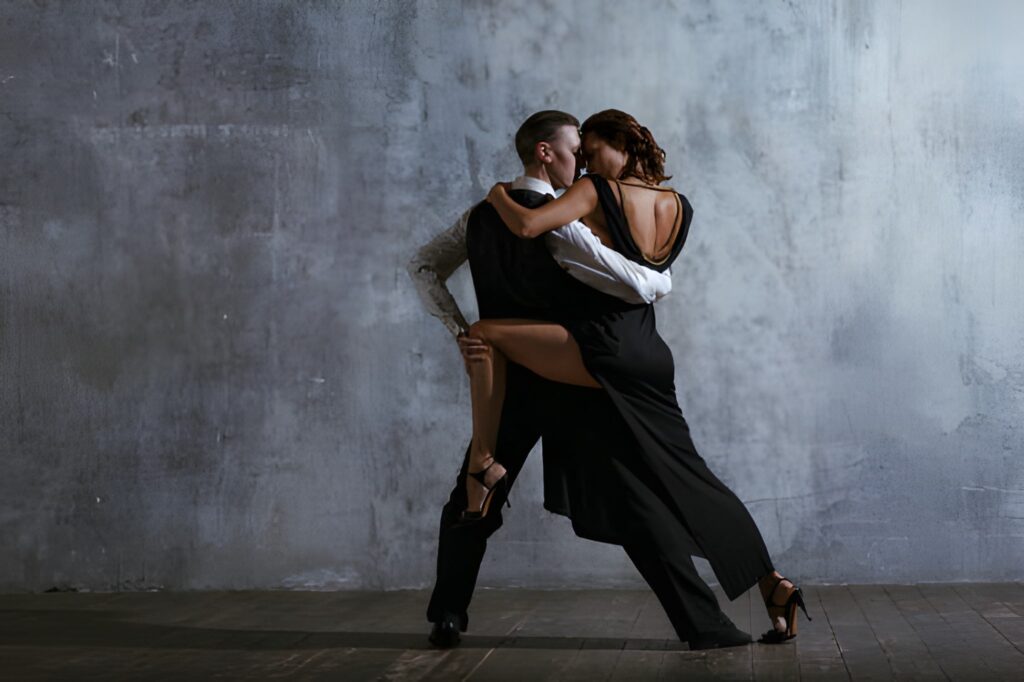


To help demystify the niche world of ballroom dancing, we’re going to shine the spotlight on the dividing line between International Ballroom and American Smooth.
Without clarity, the ballroom dancers from either side could seem like rival dance gangs. As incredible as the ensuing dance fight might be, we’d prefer to eliminate any speculation, shop talk, or any other barriers to entry.
International Ballroom Vs. American Smooth: What’s the Difference?
1. The Dances
The American Smooth is made up of Waltz, Tango, Foxtrot, and Viennese Waltz.
The International Ballroom is made up of Waltz, Tango, Viennese Waltz, *Slow Foxtrot, and Quickstep.
*Slow Foxtrot is, you guessed it, slower than American style Foxtrot.
2. The Dance Frame
The American Smooth features every frame you can think of. Whether that is a closed hold, promenade, side by side, or some creative, non-traditional, dance frame the world has yet to see. It’s all free and clear frame-wise for the American Smooth.
The International Style Dance frame is restricted. You must stay in your dance hold, facing your partner, maintaining body contact, at all times. There are no open positions in its dance styles.
3. The Costuming
The American Smooth treats costuming in the same fashion as their dance frames – there’s plenty of room for interpretation. Granted, the leaders will wear a suit, and the followers will wear a gown, but you’ll often see more skin on the ladies, more color options on the gents, and occasionally, a dress that looks like a latin costume and a gown were spliced together.
The International Style is a bit more traditional. It’s rare to see the gents in anything other than a standard tailsuit. For the ladies, the gown will commonly have an attachment to the sleeve to enhance the flow of the dress. Speaking of which, the gowns, in general, have a lot more fabric to create more movement.
4. The Technique
The American Smooth features all of the same requisite footwork, swing, sway, rise and fall, and head position as the International style. Since a lot of the Smooth takes place outside of the dance frame, many principles of latin dancing, arm styling, and dramatic interpretation of each dance are also a big point of emphasis.
The International Style benefits from its singular “dance-framed” focus. While it may be more tedious and repetitive, the footwork, frame, and musicality of the best International Standard dancers are marveled and sought after.
5. The Application
The American Smooth is built on a foundation of social dancing. This makes it easy to transition from ballroom halls to dance parties, office functions, or nightclubs.
The International Style is a bit like a tuxedo or evening gown. It may not blend into a lot of environments, but when it’s in the right one, it’s striking. So it may be rare to see this style blend well at a less formal gathering, but with a great frame and smooth movement, blending in may well be impossible.
Final Thought
One of the greatest things about this hobby is that you don’t need to pick sides. In fact, all of us ballroom dancers can learn from both and use it to improve our dancing progress. While there are some ardent dance students on either side, cutting one out in favor of the other can limit your overall enjoyment from your dance journey.
Think of this fact:
Many of the top American Smooth professionals work with International Standard dance instructors and many of the top International Standard professionals work with American Style coaches.
Why? Because each side appreciates what the other is doing and you can always gain something by trying new things especially throughout your dance journey.
Hopefully, this clears up any lingering questions you may have about the difference between these two ballroom dance styles. If there are any other comparisons you think should be made, or if you have a suggestion for something you’d like to see covered, leave a note in the comments below.